
(And Why I Make My Own)
Let’s talk about glass cleaner—because whatever’s in that neon blue bottle under your sink probably isn’t doing you any favors.
Most store-bought glass cleaners, including the big names like Glass Plus or Windex, contain ammonia. On the surface, ammonia sounds like it’s just part of a strong cleaner. But let’s dig into where it actually comes from, what it does, and why it might not belong in your cleaning routine.
What Is Ammonia and Why Is It a Problem?
Ammonia is a chemical compound made of nitrogen and hydrogen. It occurs naturally in small amounts—your body even produces some. But the stuff in glass cleaner is synthetic, often made from natural gas through a process that produces a whole lot of greenhouse gases.
It’s strong, yes. It cuts grease and evaporates fast, which is why it’s used in glass cleaners. But that “fast-evaporating” feature is exactly why it can irritate your nose, throat, and lungs—especially if you’re cleaning a bunch of windows or using it in a small space. It’s particularly harsh on people with asthma or any kind of respiratory issues.
And here’s where it gets dangerous.
Mixing Bleach and Ammonia Can Kill You
Most folks don’t realize how easy it is to accidentally mix ammonia and bleach. You’ve got one bottle for the toilet, one for the mirrors, a few old spray bottles with mystery recipes from Pinterest—next thing you know, you’re deep-cleaning a bathroom and boom, you’re coughing, your eyes are burning, and you’ve just made toxic chloramine gas.
In high concentrations, it can cause permanent lung damage or even death. And it doesn’t take much. You can create a hazardous mix just by cleaning the toilet with bleach and then wiping the mirror with ammonia glass cleaner in the same enclosed room.
This is not rare. It’s a real risk in everyday homes because people assume everything under their sink plays nicely together. It doesn’t.
What Glass Actually Needs to Get Clean
So let’s break this down. What does glass really need to look crystal clear?
- Water – It’s the base, but it’s got to be clean. Tap water leaves behind minerals. That’s why we use distilled water—no minerals, no spots.
- Alcohol – This is what helps the water evaporate quickly so residue doesn’t have time to pool and leave streaks.
- A Surfactant – Fancy word for something that breaks down oils and grease. Dish soap or Castile soap works perfectly.
- A little scent – Optional, but peppermint essential oil gives it a fresh, clean smell without any fake chemical stink.
My Go-To Glass Cleaner Recipe
Here’s the mix I swear by. It works better than anything I’ve bought at the store, and it doesn’t make me feel like I’m huffing floor stripper in a gas station bathroom.
In a 32 oz spray bottle:
- 1/3 cup rubbing alcohol (isopropyl, at least 70%—91% works too)
- 2/3 cup distilled water
- 2 tablespoons dish soap (or unscented Castile soap)
- 3–5 drops peppermint essential oil (optional, but recommended)
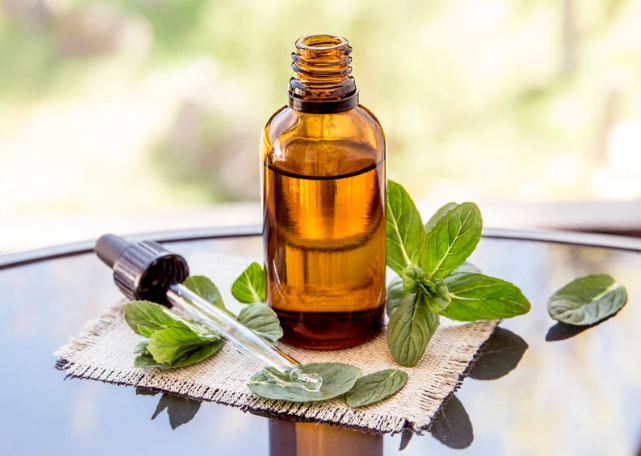
Shake gently. The soap acts as a surfactant, which helps distribute the peppermint oil and break down grime. You’ll still want to give it a quick shake before each use, just to keep everything evenly mixed.
How to Use It (Properly)
Glass cleaner is only half the battle. The real magic is in the method.
- Start with a microfiber rag. Spray the mirror with the glass cleaner and wipe it down to get off the big stuff—dust, fingerprints, toothpaste, etc.
- Then give another light mist of the glass cleaner spray.
- Buff dry with a cheap paper towel.
Yes, cheap paper towels. The bargain bin stuff works best—no lotion, no quilting. Just thin, scratchy, disposable fiber. Avoid using the last few sheets on the roll—there’s adhesive in there that can smear your mirror and is a nightmare to clean off.
We only use paper towels for windows, toilet rims, and for buffing a surface to a shine. Everything else—floors, counters, cabinets—gets washable microfiber.
One Word of Caution: Alcohol Fumes
Rubbing alcohol is less toxic than ammonia and bleach, but it’s not harmless. Don’t spray this stuff all over the place like you’re fogging for mosquitoes. A few mists go a long way.
Wear a mask if you’re cleaning a lot of glass, or open a window. If you’re cleaning inside a closed shower stall, be extra careful—alcohol fumes can build up quickly and give you a headache, nausea, or worse. Respect it, and it’ll do the job safely.
The Bigger Picture
Rubbing alcohol gives you the drying power of ammonia without the long-term risks to your lungs or the planet. It evaporates clean, leaves no streaks, and doesn’t stick around in our water supply doing harm.
It’s proof that a few cheap ingredients and a little knowledge can go a long way—no neon blue mystery fluids required.
 Clean4Profit
Leave a comment